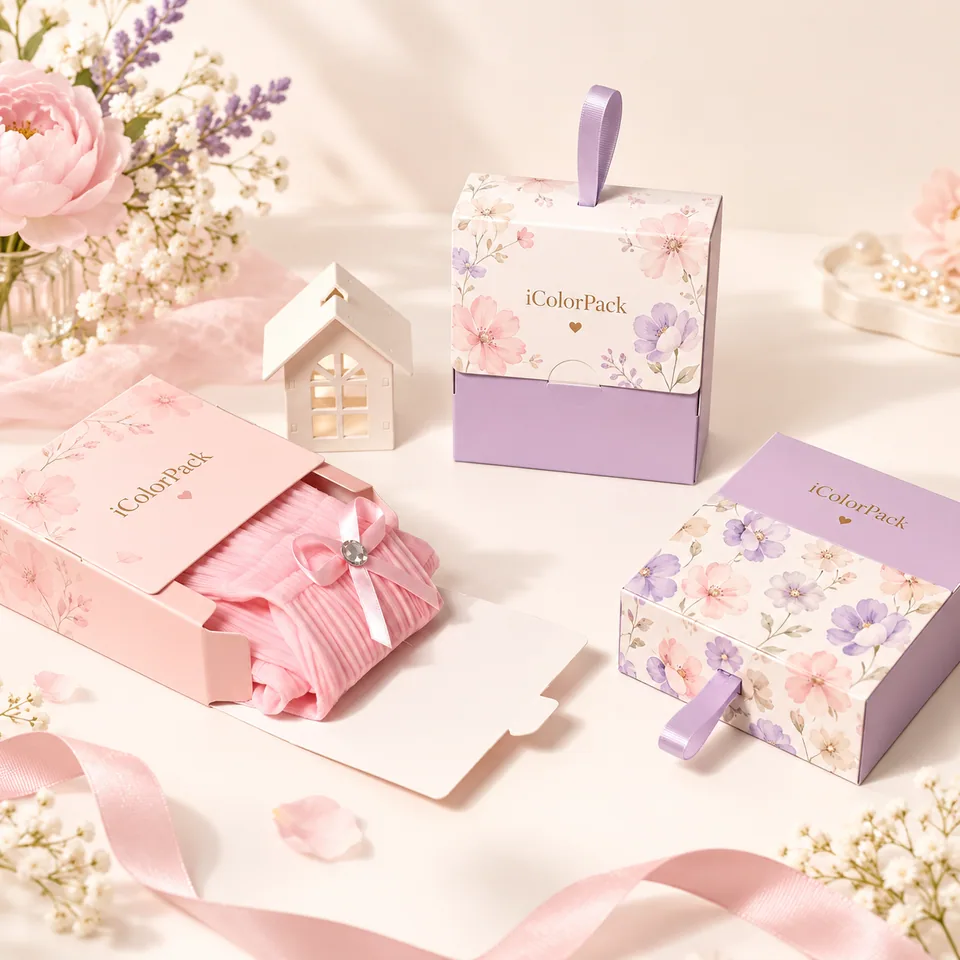
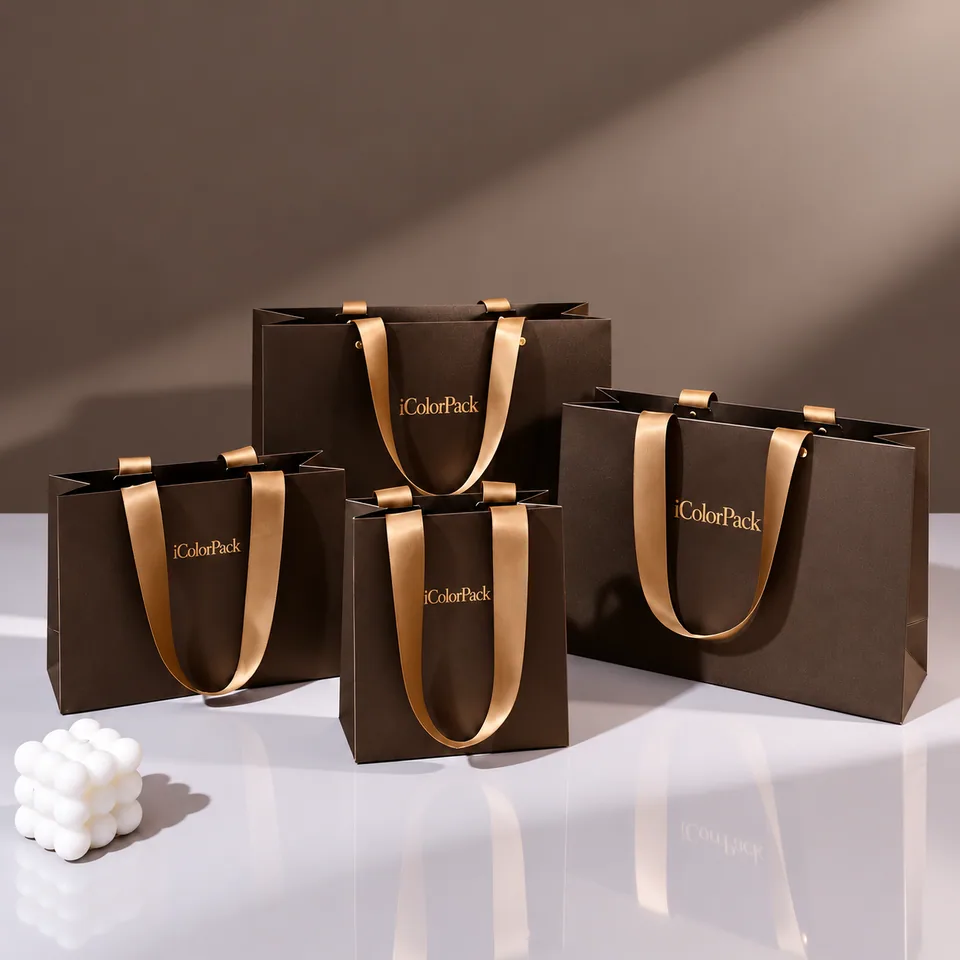
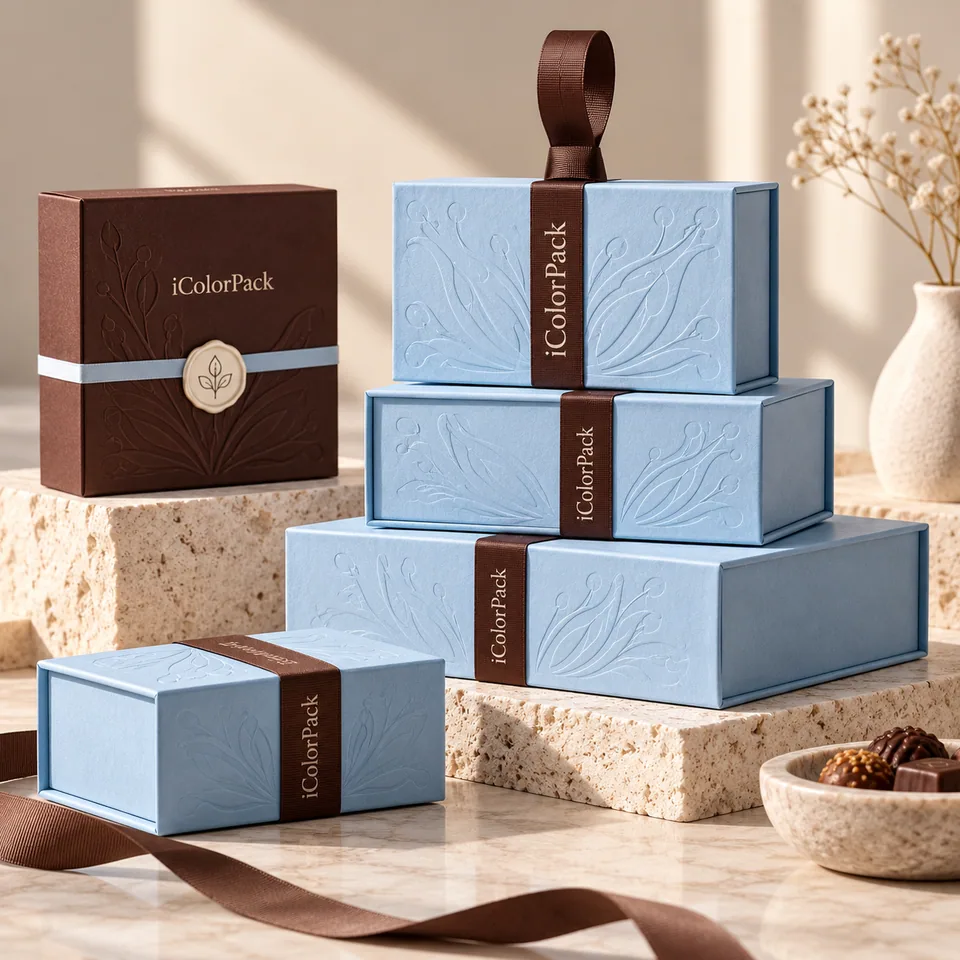
Choose the structure first, then select the paper, print and finish around the actual product. Screen appearance alone cannot establish texture, strength or color.
Match the surface treatment to the job.
Decision
Useful distinction
Sample check
Paper & board
Paper weight, board thickness and structure are separate inputs
Ask for the material description and a finished sample.
Printing
Full-color artwork and a single-color logo have different setup needs
Check small text, folds and color references.
Foil stamping
A reflective detail rather than an all-purpose print substitute
Review fine lines, registration and scuffing.
Emboss / deboss
Raised or recessed relief
Approve detail on the selected paper and box construction.
Lamination / coating
Changes the finish and the material combination
Review appearance, rub and any requested claim.
Window / insert
Additional components, not only decorative features
Confirm material, fit, contact conditions and included scope.
Color across a packaging set
A ribbon, a textured bag and a coated box can show the same artwork differently. A physical color reference and representative samples are more useful than comparing separate phone images. Record the artwork revision and accepted material together for reorders.
Evidence before a claim
Do not infer food-contact suitability, certification, recycled content or recyclability from a render or from paper color. Request the documentation that applies to the exact material and intended use. Treat the printed outer pack and any direct-contact part separately.
PRACTICAL ANSWERS
Questions before you order.
Are your MOQ and lead times fixed?
No fixed MOQ or universal delivery time is promised in this guide. Construction, quantities, material, finishing, sample approval and destination must be reviewed in the project quote.
Can a digital mockup replace a physical sample?
A mockup communicates layout and visual direction. It does not validate load, fit, actual print color, relief depth or transport performance.
Can I approve packaging from these images?
Confirm the actual materials, construction and accessories in the written quote and on the approved sample before production.
Use these comparisons to prepare a sample brief. Availability and the final appearance depend on the paper, artwork and construction; approve the combined result rather than each finish in isolation.
Material or finish
Useful for
What to verify
Coated paper
Detailed printed artwork and a smooth surface.
Colour on the actual paper, fold cracking and the selected protective finish.
Textured paper
A tactile presentation with restrained graphics.
Fine text and foil reproduction on the texture; compare a physical swatch.
Kraft paper
A natural-looking retail presentation.
How the brown substrate changes printed colours; do not assume white-screen colours will match.
Matte or gloss lamination
A subdued or reflective surface respectively.
Scuffing, fingerprints, fold behaviour and the actual film/paper combination.
Foil stamping
A metallic logo or a small decorative accent.
Fine lines, large solid areas, registration and adhesion on the selected surface.
Embossing or debossing
Raised or recessed tactile detail.
Paper response, depth, legibility and alignment with printed artwork.
Spot UV
Selected glossy details against a contrasting surface.
Registration, curing and compatibility with the underlying finish.
A finish does not by itself prove recyclability, food-contact suitability or certification. Request evidence for the exact material and intended use when those requirements matter.