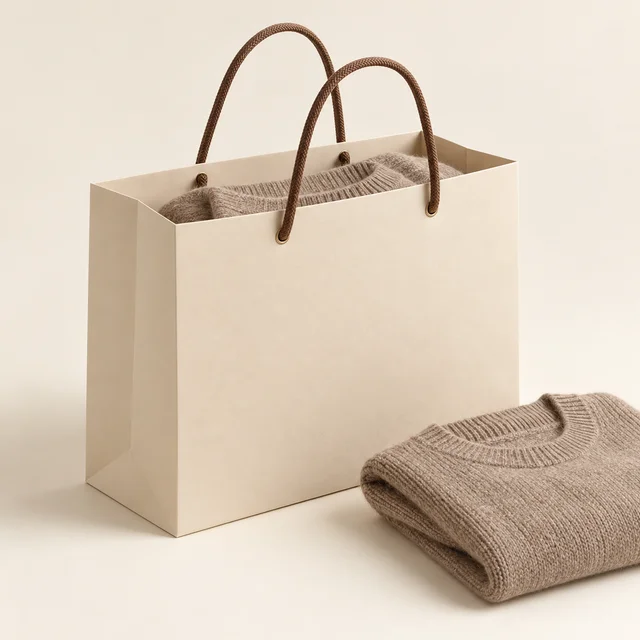
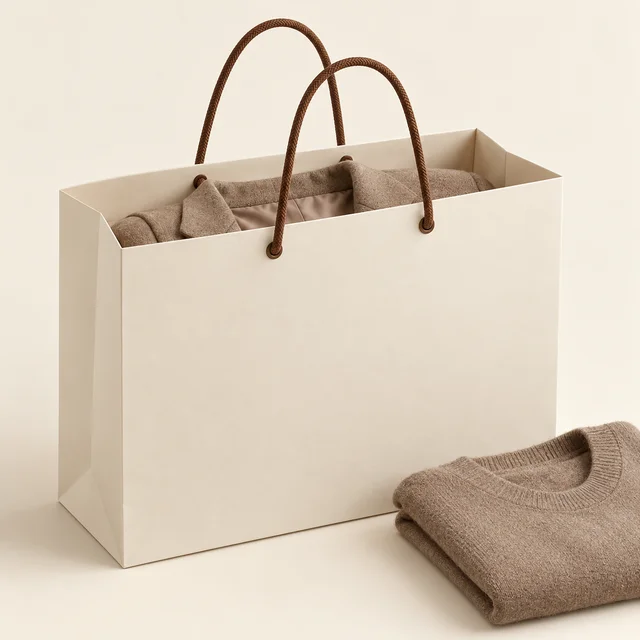
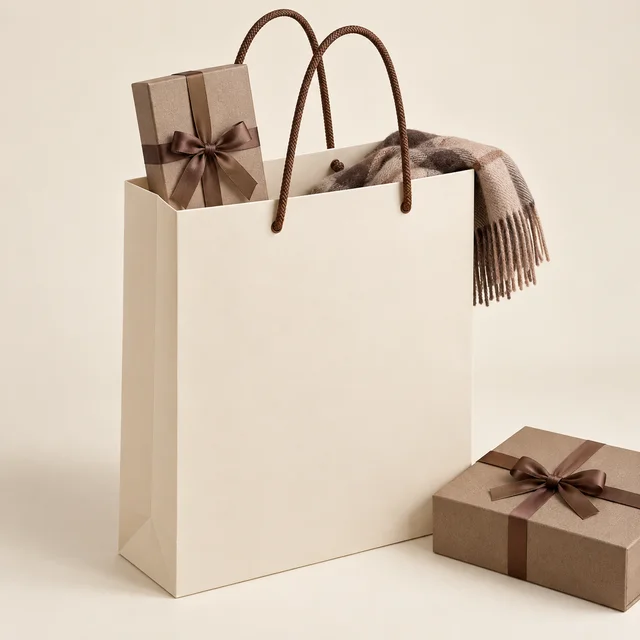
Choose a custom paper bag around the finished product or box it will carry. The useful inputs are width, gusset, height, packed weight and handle drop; the logo and paper finish follow those structural decisions.
A custom ribbon-handle paper bag should fit the packed gift and carry it comfortably. Specify width, gusset, height, product weight and handle drop before selecting the paper and logo treatment.
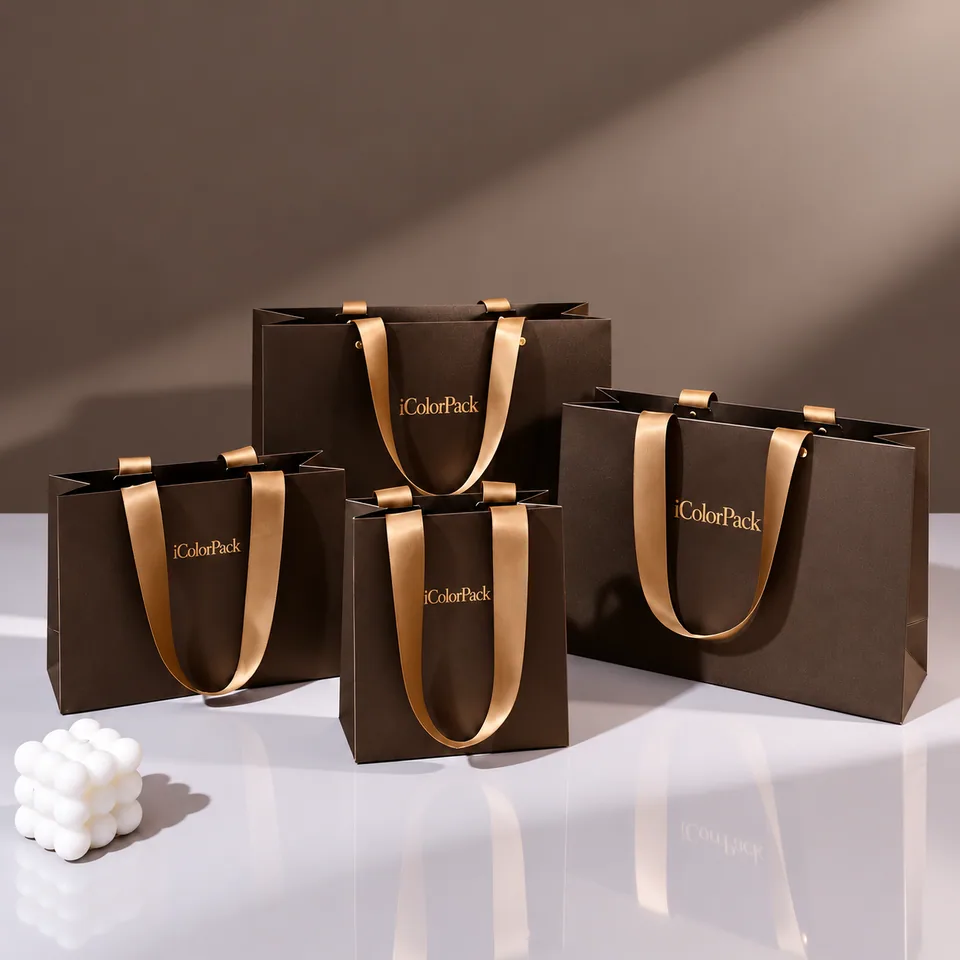
The brown-and-gold concept shows several bag proportions for retail and gifting. A good-looking small bag cannot simply be scaled up without checking the base, upper fold and handle attachment. Match each size to the intended product set so customers do not receive a narrow bag that distorts around a box or an oversized bag with excess movement.
Finished bag size: Width × gusset × height; distinguish the usable opening from the outside measurement.
Handle drop: Space between the top edge and the grip; check with the actual filled pack.
Reinforcement: Review top fold, handle anchoring and base support.
A bag is often the last part of the presentation a customer touches. Ribbon, rope and paper handles give different looks, but the proposed attachment and reinforcement must still suit the load. Start with the packed contents rather than a generic “small” or “large” bag.
Measure the packed gift, not the loose item.
Give the total carry weight and intended handling.
Review fine foil detail on the actual paper.
Compare per-size quantities and handle attachment costs.
Compare your options.
Format
Typical project
Decision to review
Ribbon-handle gift bag
Retail gifting and coordinated box sets
Check handle drop, top fold and base support.
Kraft-style paper bag
A natural paper appearance
Confirm stock, print coverage and any requested material claim.
Box-and-bag set
A consistent gift presentation
Fit the finished box into the finished bag before ordering.
MATERIALS · STRUCTURE · FINISH
Build the bag around the way it will be carried.
Boutique purchases, gift sets, event handovers and boxed bakery orders each need a different balance of carrying comfort, footprint and presentation.
01
Paper & reinforcement
Compare coated paper for a crisp printed surface, uncoated stock for a tactile feel and kraft paper for a natural appearance. Specify the actual paper grade rather than treating color as a material specification. The top fold and base reinforcement should be reviewed with the loaded bag.
02
Handle construction
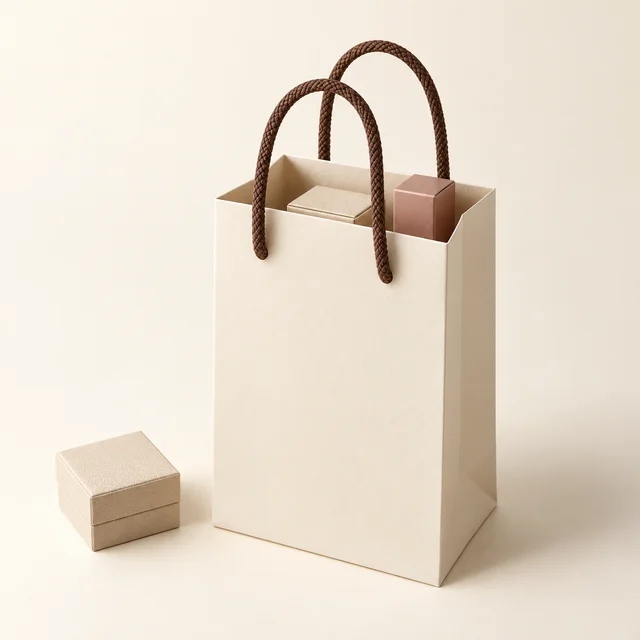
Ribbon gives a broad, decorative grip; cord creates a different profile; paper handles can simplify the material mix. Handle width, attachment, knot or fixing position and drop all affect use. Test the proposed attachment with the actual contents instead of inferring strength from the photograph.
03
Box-to-bag sizing
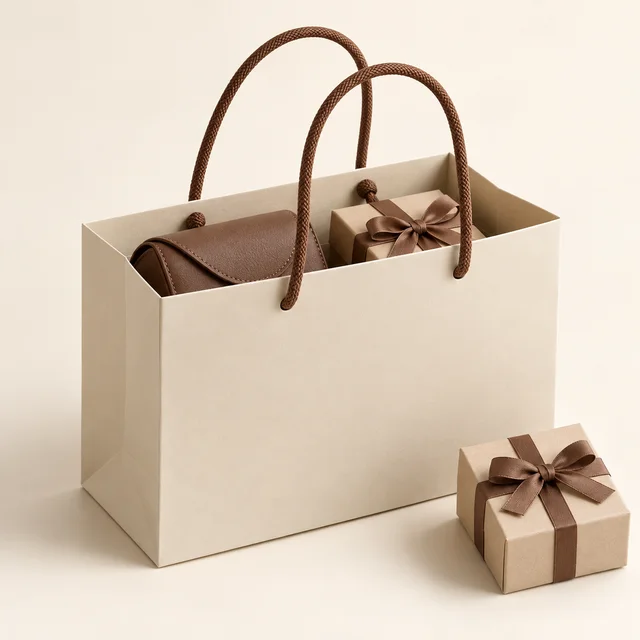
Measure the finished gift box at its widest points, including bows or projecting lids. Leave room to insert and remove it without catching the handle fixings. Record width × gusset × height and handle drop separately; confirm whether dimensions are internal or external.
04
Print & finish choices
A small foil logo can provide contrast without covering the entire sheet. Dark solid printing can make scuffing and fold marks more visible. Review a physical paper swatch and a finished sample together, particularly when matching bags to boxes made with a different substrate.
Avoid this specification mistake
Choosing a bag from the loose product dimensions can leave the finished gift box too tight. Fit the complete packed set, then check handle access and loaded carrying comfort.
FROM IDEA TO APPROVAL
A clearer route to your packaging order.
01
Measure & brief
Provide the packed product dimensions, weight and quantity per design
02
Review the proposal
Confirm the construction, component list, artwork scope and delivery assumptions. Resolve any differences before comparing quotations.
03
Test the filled sample
Measure the packed gift, not the loose item. Record the approved revision and remaining changes.
04
Agree the order scope
Keep material references, inspection points, packing format and the arrival plan together with the written approval.
It depends on the size, paper, handle, print and finishing. Send quantities per size and design for review; a general website number cannot replace a written project quotation.
Should I choose a ribbon or paper handle?
Compare the intended presentation, grip and loaded sample. Handle style alone does not establish carrying strength or environmental performance.
Can a paper bag be recycled?
That depends on the complete construction and the local collection system, including coatings, handle and other components. Request the material details before making a recycling claim.
FIND YOUR PAPER BAG SIZE
A size for every kind of gift.
Explore eight regular paperboard bag sizes for retail, beauty and clothing. Dimensions are width × gusset × body height in cm: finished external size, excluding handles.
Choose using your product's packed dimensions and allow room for insertion and removal. Product pairings are use examples; confirm fit and carrying strength with a sample.
PROJECT INQUIRY
Let's work through your packaging brief.
Send dimensions, quantity and destination for a specification review. For artwork or image references, email Jennifer directly.