Define the set
List every bag, carton, insert, tag, ribbon and liner. Record dimensions and quantities per component and artwork version. A shared design does not mean each piece uses the same material or manufacturing method.
A coordinated bakery range combines boxes, bags and other components around a shared design. Each item still needs its own dimensions, material specification and intended-use review.
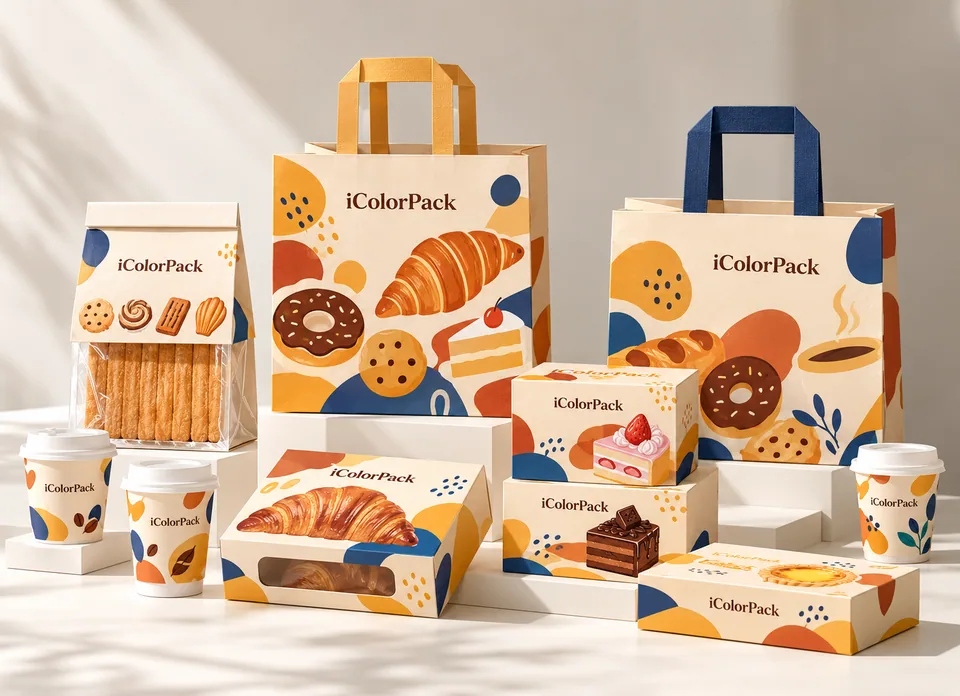
The supplied concept brings together paper bags, pastry boxes, a windowed pack and takeaway cups. It is useful for discussing a consistent brand system across counter service and gifting. It is not a statement that every pictured component is included in a quote. List the components you actually need, the order quantity for each and any separate sourcing requirements.
Use the illustrated design as a visual brief. Send the packed dimensions, weight and quantity per design before comparing proposals. The final specification should distinguish the decorative outer packaging from every insert, liner, wrap and accessory.
Planning inputs, not fixed stock specifications. Measurements and materials are agreed for each project.
| Decision | Information to provide |
|---|---|
| Component list | Name every box, bag, liner, cup or sleeve to be reviewed. |
| Quantity per item | Different formats and designs can have different setup costs and order economics. |
| Color reference | Review matching across coated board, textured paper and other surfaces. |
| Fit relationships | Check the finished box inside its bag, plus any stacking or counter-storage needs. |
| Option | Useful for | Check before approval |
|---|---|---|
| One shared artwork family | A recognizable counter-service range | Adapt artwork to each dieline instead of stretching one design. |
| Box + matching carry bag | A focused gift presentation | Check the box-to-bag fit before ordering both. |
| Phased rollout | Start with selected high-use components | Agree which colors and sample references will be reused later. |
A matching visual does not make materials equivalent. Separate the outer printed packaging from direct-contact liners, cups or coatings and ask which items are included, which need separate documentation and which require another supplier.
Record the artwork revision and agreed material choices with the approval sample.
For custom bakery packaging sets, ask what the quotation includes: finished packaging, setup, tooling, sample, accessories, protective packing and freight. Keep quantities per size and design explicit. A low unit price can represent a different scope.
Request the packing format, units per carton, carton dimensions and gross weight. Compare a simpler format if a small initial run or shipping volume makes the original design impractical.
Use the quote comparison guide →Event favors, seasonal gifts and coordinated retail packaging work best when component fit, artwork consistency and delivery are planned together.
List every bag, carton, insert, tag, ribbon and liner. Record dimensions and quantities per component and artwork version. A shared design does not mean each piece uses the same material or manufacturing method.
Prepare separate dielines for each structure and identify critical colors. A screen image is a direction, not a physical color reference. Compare approved proofs on each substrate, especially when combining coated paper, textured wrap and fabric accessories.
Distinguish a blank fit sample, a print proof and a finished approval sample. Each answers a different question. Agree which components are included, which differences remain and what written approval is required before proceeding.
Work back from the required arrival date through freight, packing, production and approval. Event personalization creates additional proofing risk: check names, dates and quantities per version before approving artwork. Confirm the actual schedule in the quotation.
A single “total quantity” for a mixed set can hide different quantities per size or artwork. Break the order down before comparing prices.
Provide Name every box, bag, liner, cup or sleeve to be reviewed.
Confirm the construction, component list, artwork scope and delivery assumptions. Resolve any differences before comparing quotations.
Check each component against its own approved dimensions. Record the approved revision and remaining changes.
Keep material references, inspection points, packing format and the arrival plan together with the written approval.
Send an itemized list and quantities. The team can review the requested scope; items shown in a concept are not automatically confirmed capabilities or included accessories.
Different paper, coatings and print methods can shift appearance. Use a physical reference and approve representative samples together.
A phased plan can be discussed. Keep the artwork revision and approved material references so the later components can be compared consistently.
Send dimensions, quantity and destination for a specification review. For artwork or image references, email Jennifer directly.
[email protected]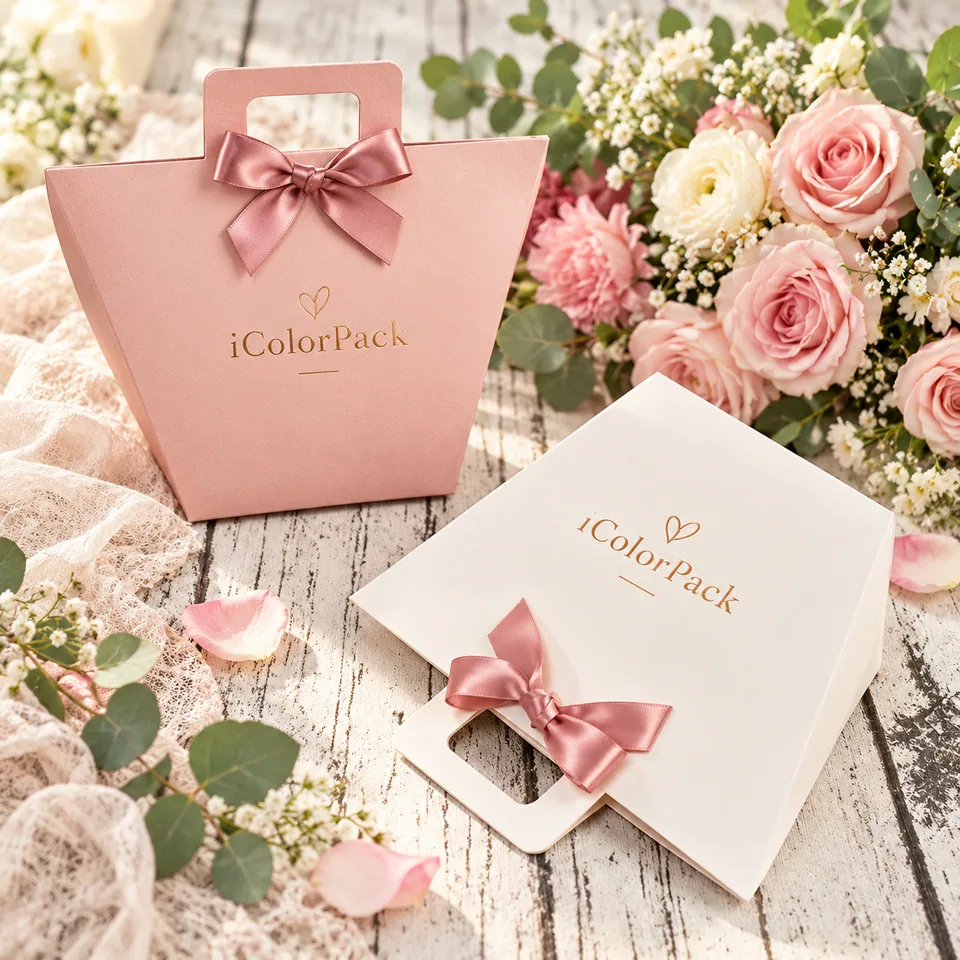
Wedding favor packaging starts with the gift, the event quantity and the assembly plan.
Explore this packaging →