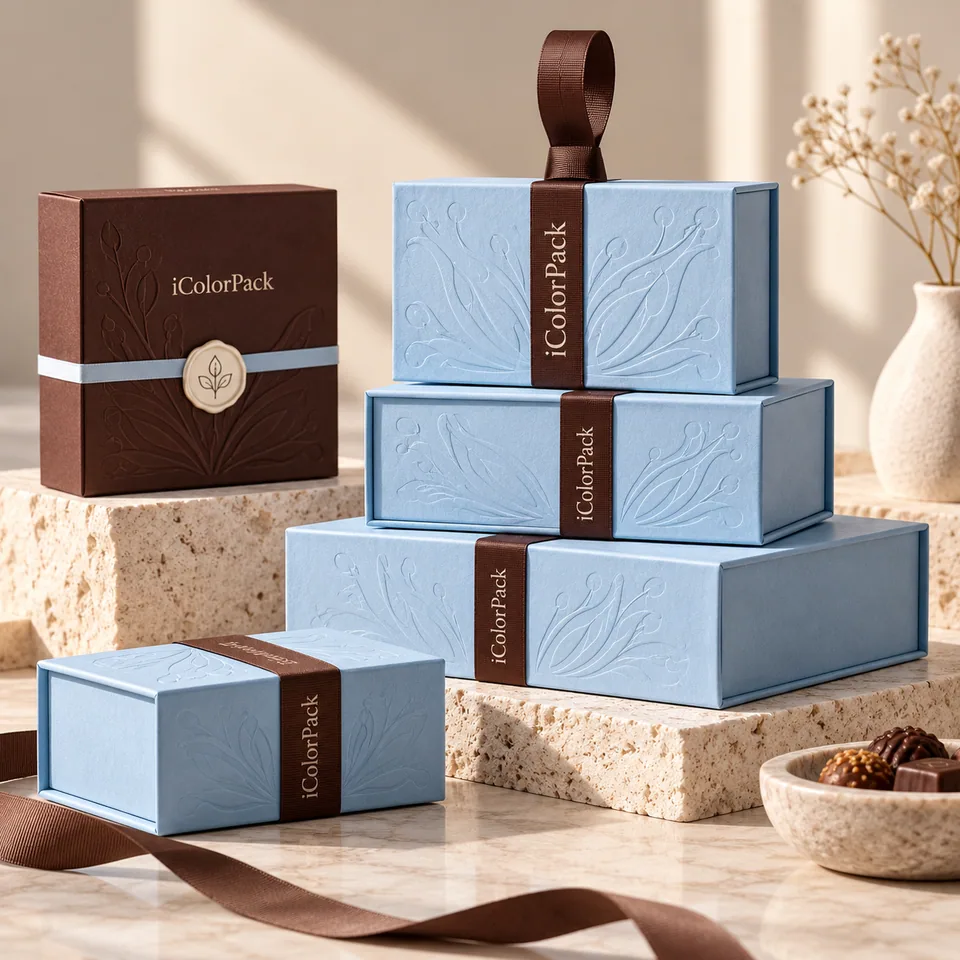
Embossed gift packaging uses a raised pattern to add tactile detail. Paper texture, artwork scale and the underlying structure determine whether the detail remains clear on the finished box.
The blue and brown concept pairs a botanical relief with a ribbon wrap. Use it to discuss the visual direction rather than as proof of an available die or production result. Small stems, large solid areas and artwork crossing a folded edge behave differently when embossed. Review the design on the actual selected wrap or carton stock.
Use the illustrated design as a visual brief. Send the packed dimensions, weight and quantity per design before comparing proposals. The final specification should distinguish the decorative outer packaging from every insert, liner, wrap and accessory.
SPECIFICATION CHECKLIST
What to confirm in the brief.
Planning inputs, not fixed stock specifications. Measurements and materials are agreed for each project.
Decision
Information to provide
Emboss artwork
Vector outlines with the intended raised area and smallest detail identified.
Paper surface
Color, coating and texture reviewed on a physical reference.
Registration
If foil or printing aligns with relief, check the combined tolerance.
Box construction
Lid fit and wrap quality remain important even when the finish is the focus.
COMPARE THE TRADE-OFFS
Which format fits your project?
Option
Useful for
Check before approval
Blind embossing
Relief without an added foil layer
The effect depends on paper texture and light direction.
Foil + emboss
Reflective and raised detail together
Adds registration considerations and finishing steps.
Printed pattern
A visual pattern without relief
A different cost and tactile result; useful to compare on a quote.
One point buyers often miss
A very fine botanical pattern can look sharper in a concept render than on textured paper. Specify a minimum acceptable detail using the actual sample, and agree how repeat orders will be checked against it.
BEFORE BULK APPROVAL
Check a loaded sample.
Record the artwork revision and agreed material choices with the approval sample.
Inspect fine lines under normal viewing light.
Check whether the pattern distorts near edges.
Compare foil or print registration where specified.
Keep an approved sample and artwork revision for reorders.
COST & DELIVERY
Compare the whole order.
For custom embossed gift boxes, ask what the quotation includes: finished packaging, setup, tooling, sample, accessories, protective packing and freight. Keep quantities per size and design explicit. A low unit price can represent a different scope.
Request the packing format, units per carton, carton dimensions and gross weight. Compare a simpler format if a small initial run or shipping volume makes the original design impractical.
Choose the opening experience, then engineer the fit.
Jewelry, small accessories, curated gift sets and chocolate assortments benefit from different interiors even when their outer boxes look similar.
01
Board & wrapped paper
Rigid board supplies the form; the wrap supplies much of the color and surface feel. Thickness alone does not define performance. Specify grade, measured thickness, wrap material and the proposed corner construction, then review squareness and wrap adhesion on the sample.
02
Insert & product access
Paperboard dividers, shaped trays and other insert routes solve different presentation problems. Define cavity count, orientation and finger access around the product. A tight-looking photograph does not show whether the product can be removed comfortably or whether its finish will rub.
03
Closure & accessories
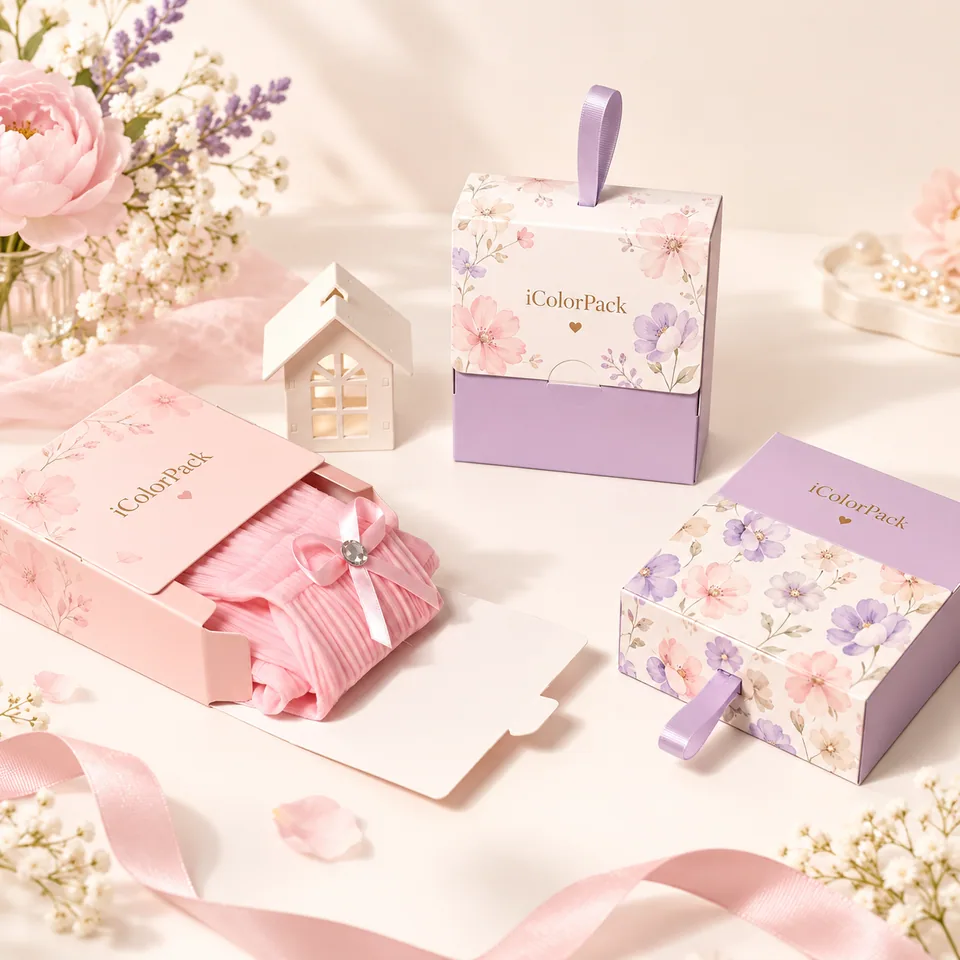
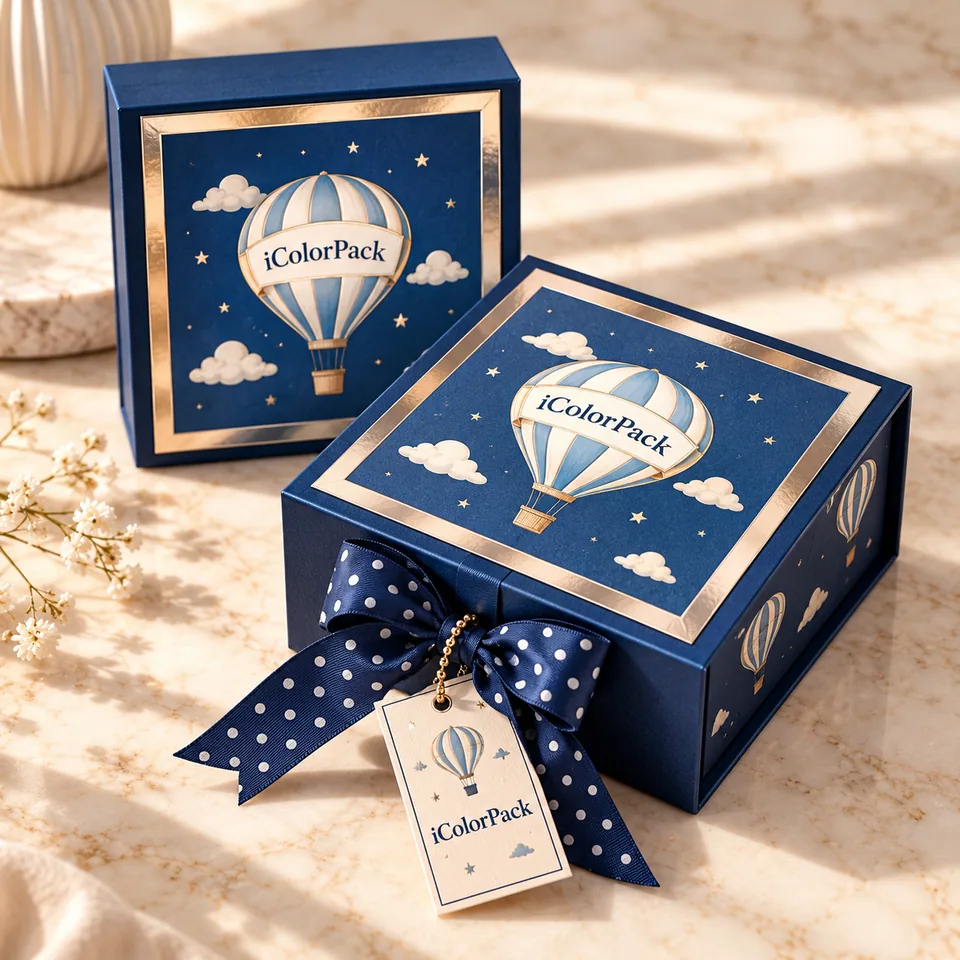
A lid-and-base box needs usable grip and a suitable lid depth. A drawer needs controlled sliding resistance. Ribbons and tags add assembly and packing requirements. Confirm these as separate components rather than assuming every illustrated accessory is included.
04
Storage & freight
An assembled rigid box can occupy considerably more space than a flat carton. Compare packing format, units per shipping carton and destination assembly requirements before choosing the format. A presentation box still needs appropriate outer protection for parcel delivery.
Avoid this specification mistake
Paying for a heavier board while leaving the insert undefined can produce an expensive box with poor product fit. Evaluate the complete filled pack.
FROM IDEA TO APPROVAL
Plan your custom embossed gift boxes project.
01
Measure & brief
Provide Vector outlines with the intended raised area and smallest detail identified.
02
Review the proposal
Confirm the construction, component list, artwork scope and delivery assumptions. Resolve any differences before comparing quotations.
03
Test the filled sample
Inspect fine lines under normal viewing light. Record the approved revision and remaining changes.
04
Agree the order scope
Keep material references, inspection points, packing format and the arrival plan together with the written approval.
What is the difference between embossing and debossing?
Embossing raises a design; debossing recesses it. The achievable effect depends on the paper, construction and tooling. Specify the desired effect instead of treating them as interchangeable names.
Do embossing tools affect the price?
Yes, a custom finishing operation may involve tooling and setup. Ask the quote to identify tooling charges and clarify future reuse or revision terms.
Will an embossed logo match the digital mockup exactly?
Do not approve tactile depth or fine detail from a screen alone. Review the physical sample on the proposed paper under ordinary lighting.
PROJECT INQUIRY
Let's work through your packaging brief.
Send dimensions, quantity and destination for a specification review. For artwork or image references, email Jennifer directly.