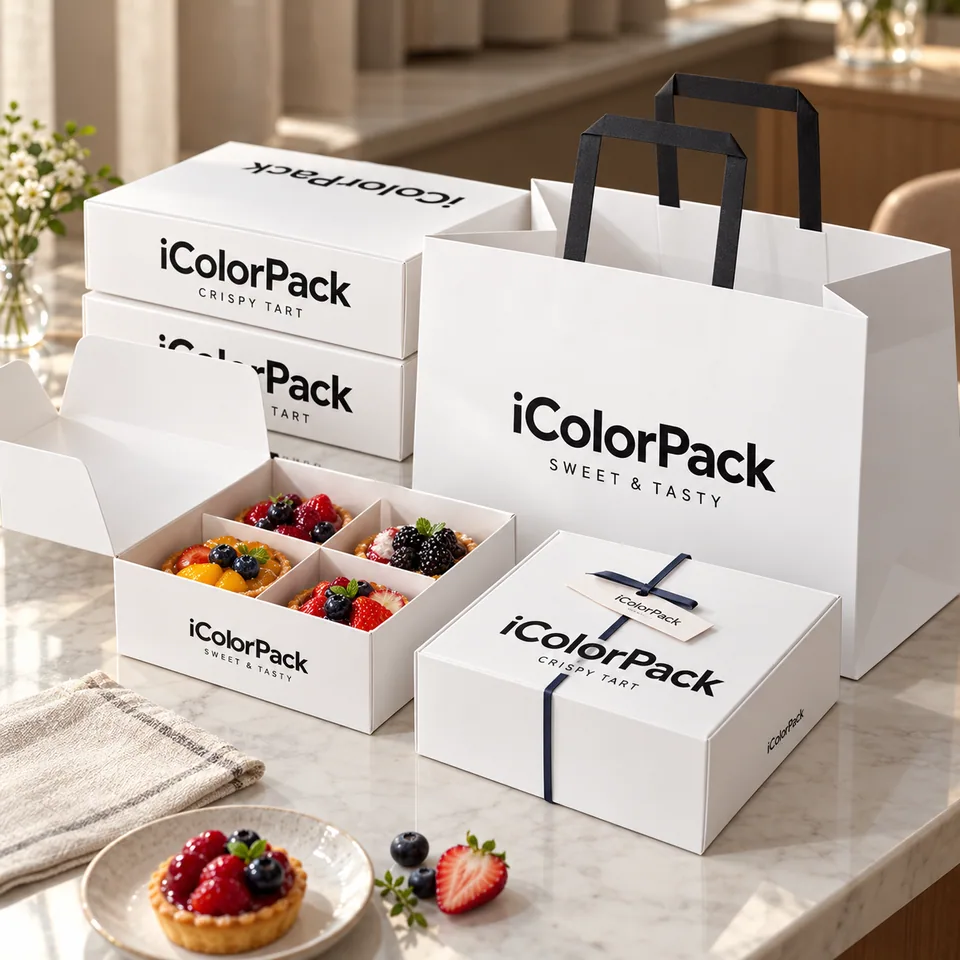
Partitioned tart packaging starts with the pastry base and topping height. A fitted cavity should limit sideways movement without rubbing fruit, cream or a fragile crust.
Use a tart box for individual fruit tarts, mixed dessert selections or a coordinated pastry gift set. Measure the finished tart on its actual base rather than copying the outside dimensions of an existing box. The arrangement, removable dividers and opening direction all influence how staff pack the order and how the customer lifts each tart out.
Use the illustrated design as a visual brief. Send the packed dimensions, weight and quantity per design before comparing proposals. The final specification should distinguish the decorative outer packaging from every insert, liner, wrap and accessory.
SPECIFICATION CHECKLIST
What to confirm in the brief.
Planning inputs, not fixed stock specifications. Measurements and materials are agreed for each project.
Decision
Information to provide
Cavity layout
Single tart or multiple portions; record the base diameter and the spacing between pieces.
Usable height
Measure from the support board to the highest decoration, then review lid clearance on a loaded sample.
Support
Discuss a removable paperboard divider, individual bases and a stable outer base.
Surface & artwork
Keep important artwork away from folds; review the printed exterior separately from any direct-food-contact component.
COMPARE THE TRADE-OFFS
Which format fits your project?
Option
Useful for
Check before approval
Open tray + sleeve
Easy visual presentation
Requires a secure closure and protection for exposed sides.
Hinged carton + divider
Simple opening and portion organization
Divider height and lid clearance need a loaded fit check.
Gift box + carry bag
Coordinated takeaway gifting
Check that the box sits level in the bag and does not tilt.
One point buyers often miss
A divider that looks precise in a render may press on the tart shell. Test removal with a real pastry base and leave room for fingers or lifting tabs. A decorative carton alone is not a parcel-shipping system.
BEFORE BULK APPROVAL
Check a loaded sample.
Record the artwork revision and agreed material choices with the approval sample.
Place the heaviest tart in an outer cavity and check base flex.
Close the lid over the tallest topping without contact.
Lift one tart out without disturbing the next portion.
Carry the filled set in its intended bag and inspect movement.
COST & DELIVERY
Compare the whole order.
For custom tart packaging boxes, ask what the quotation includes: finished packaging, setup, tooling, sample, accessories, protective packing and freight. Keep quantities per size and design explicit. A low unit price can represent a different scope.
Request the packing format, units per carton, carton dimensions and gross weight. Compare a simpler format if a small initial run or shipping volume makes the original design impractical.
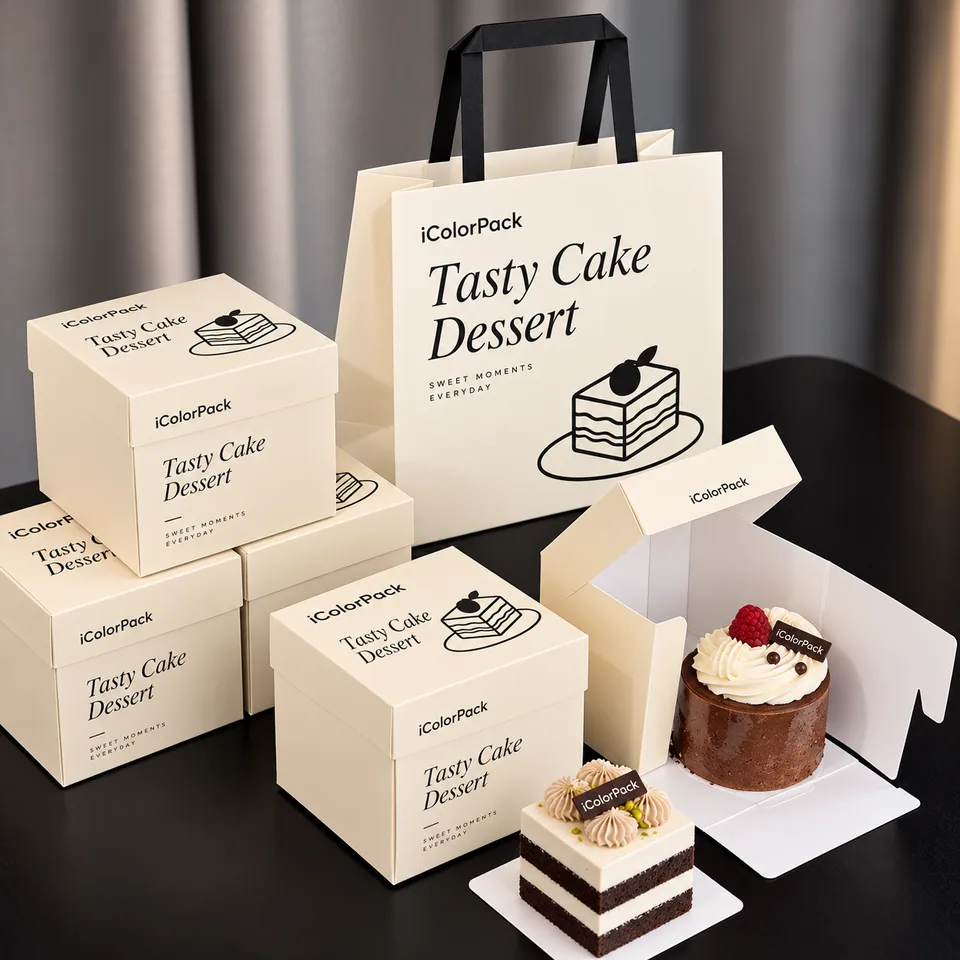
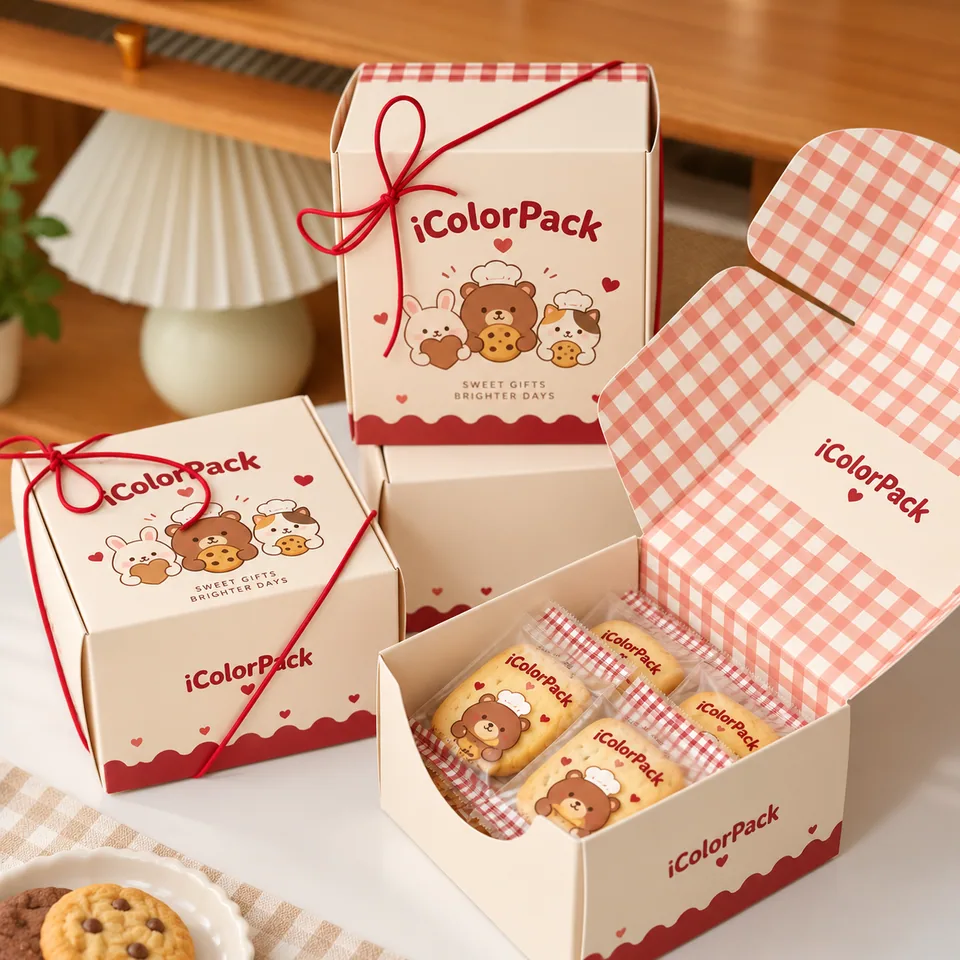
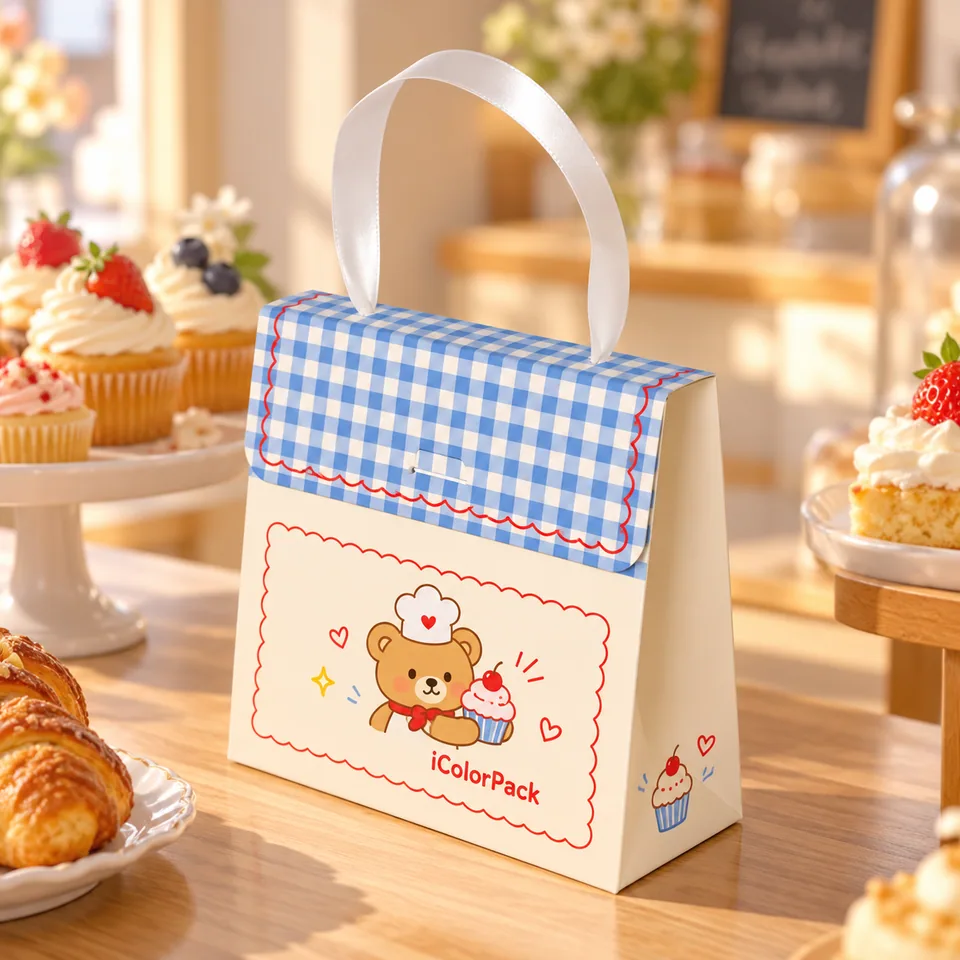
A bakery range can combine quick-service cake cartons, gift-ready cookie assortments and insert-based chocolate boxes while retaining a shared graphic identity.
01
Portion & support
Measure the cake board or tray as well as the dessert. Include the tallest decoration, wrapper and removal clearance. For assortments, list each portion and its orientation so that dividers do not crush toppings or leave fragile pieces free to move.
02
Contact layers
Identify which parts touch the food: liner, cup, tray, wrap or carton. Select the relevant material and request destination-appropriate supporting documents for that component. A decorative printed outer box should not be treated as evidence of food-contact suitability.
03
Counter service & assembly
Flat-packed cartons can reduce storage but require folding and loading labor. Trial the construction during a realistic service period. Check whether the dessert can be placed into the box without touching delicate sides and whether the closed pack is practical to stack or carry.
04
Takeaway versus shipping
Hand-carried presentation and courier delivery are different tasks. For shipping, specify movement control, cushioning and the outer carton. Temperature-sensitive chocolate and fresh desserts need a separate handling plan; the gift box does not establish temperature control or shelf life.
Avoid this specification mistake
Matching only the cake diameter can miss the wider board and taller decoration. Check the finished product in the intended storage and delivery conditions.
FROM IDEA TO APPROVAL
Plan your custom tart boxes project.
01
Measure & brief
Provide Single tart or multiple portions; record the base diameter and the spacing between pieces.
02
Review the proposal
Confirm the construction, component list, artwork scope and delivery assumptions. Resolve any differences before comparing quotations.
03
Test the filled sample
Place the heaviest tart in an outer cavity and check base flex. Record the approved revision and remaining changes.
04
Agree the order scope
Keep material references, inspection points, packing format and the arrival plan together with the written approval.
Start with the actual base diameter, tallest topping and the divider layout. Four nominal pastry diameters do not define the usable interior: clearance, divider thickness and removal space also count.
Will the box prevent tarts from moving?
A suitable divider and base can help organize the portions, but movement must be checked with the loaded sample. The image is a design reference, not a transport test.
Can I use it for delivery?
State whether delivery means local hand carry, a chilled vehicle or parcel courier. Each route changes the support, outer packaging and handling checks.
PROJECT INQUIRY
Let's work through your packaging brief.
Send dimensions, quantity and destination for a specification review. For artwork or image references, email Jennifer directly.